

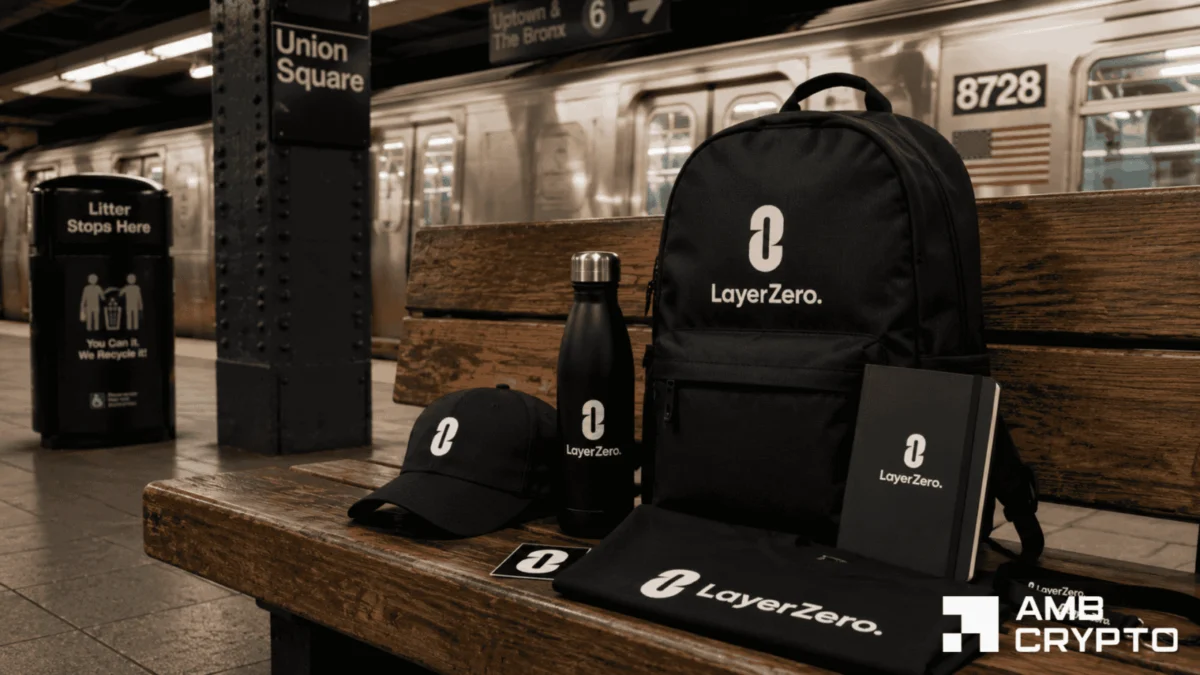
The cross-chain interoperability sector is undergoing a seismic transformation. As traditional finance (TradFi) eyes blockchain for 24/7 global settlement, the race to provide the underlying plumbing has intensified. LayerZero, a dominant force in cross-chain messaging, has officially pivoted from its roots as a middleware protocol to positioning itself as the foundational infrastructure for institutional-grade finance.
This strategic evolution arrives at a delicate juncture. As LayerZero unveils "Zero"—a dedicated Layer 1 blockchain aimed at tokenized assets—it simultaneously finds itself in the crosshairs of a heated debate regarding security models. With industry watchdogs like L2BEAT scrutinizing the alleged security advantages of rival protocols like Chainlink’s CCIP, the industry is grappling with a fundamental question: Is the current cross-chain architecture robust enough for the trillions in capital that institutional adoption promises?
The Strategic Expansion: Introducing "Zero"
In its newly released ecosystem report, LayerZero has outlined an ambitious roadmap that transcends the role of a simple bridging protocol. The company is leaning heavily into its record, which includes facilitating over $260 billion in value transfers and supporting approximately 70% of the cross-chain stablecoin volume globally.
The "Zero" Layer 1 Blockchain
The centerpiece of this transition is "Zero," a purpose-built Layer 1 blockchain. Designed specifically for financial infrastructure, Zero is intended to support the lifecycle of tokenized assets, stablecoin settlement, and high-frequency capital markets. By building its own L1, LayerZero is effectively creating a walled garden where it can ensure the integrity of the message-passing and settlement process, reducing reliance on third-party chain consensus.
Institutional Integration
LayerZero’s report references deep-seated partnerships and integrations with major financial institutions and infrastructure providers. The goal is to provide a seamless environment for traditional assets—such as bonds, equities, and commodities—to be tokenized and moved across chains without the fragmentation that currently plagues the decentralized finance (DeFi) ecosystem. By positioning itself as the "connective tissue" of institutional finance, LayerZero is betting that compliance, speed, and reliability will supersede the "move fast and break things" ethos of early DeFi.
ZRO: The Engine of Ecosystem Value Accrual
Central to the sustainability of this vision is the ZRO token. The recent report reinforces ZRO’s position as the primary value-accrual asset for the ecosystem. Addressing speculation about potential token dilution or the creation of new assets, the company clarified that no second token is planned for the Zero network.
Instead, the economic model is built on a "buyback and burn" mechanism, where revenue generated across the ecosystem is funneled toward the ZRO token. This approach serves as a long-term alignment mechanism: as institutional adoption grows and transaction volume on the Zero network scales, the deflationary pressure on ZRO is designed to increase. The strategy is clear—LayerZero is building a closed-loop economic ecosystem where the utility of the network directly translates into value for its stakeholders.
The Security Debate: L2BEAT Challenges the CCIP Narrative
While LayerZero projects an image of institutional stability, the interoperability sector remains fraught with security concerns. A recent, high-profile incident—the KelpDAO exploit—served as a catalyst for a migration narrative that favored Chainlink’s Cross-Chain Interoperability Protocol (CCIP) over LayerZero. Several projects, citing security failures, moved their infrastructure to CCIP, claiming it provided a safer environment.
However, L2BEAT, a prominent blockchain analytics and security monitor, has challenged the validity of this narrative. In a technical analysis, the platform argued that moving to CCIP does not necessarily equate to a meaningful upgrade in security.
Complexity and Operational Risks
L2BEAT’s analysis focuses on the concept of "shared security." While CCIP is often marketed as having more robust validation layers, L2BEAT points out that its model still relies heavily on centralized oracles and specific configuration setups that can introduce new vulnerabilities.
- Operational Complexity: The analysis notes that CCIP’s complexity creates a significant "attack surface." The more complex the system, the more difficult it is to audit and the more prone it is to human error or misconfiguration.
- Systemic Contagion: A critical finding from L2BEAT is that the compromise of a single supported chain or an error in a bridge configuration can still pose risks to the broader interconnected network.
- The Illusion of Safety: L2BEAT suggests that while CCIP may be marginally better than "average" configurations of LayerZero in certain edge cases, the industry is overestimating the security gap. They argue that users often conflate "brand reputation" with "cryptographic security."
Chronology: A Sector in Flux
- Q1–Q2 2024: LayerZero records over $260 billion in volume, cementing its position as the market leader in stablecoin transfers.
- Late 2024 (KelpDAO Incident): A security exploit at KelpDAO leads to public criticism of LayerZero’s security, sparking a wave of project migrations to alternative protocols, most notably Chainlink CCIP.
- Q3 2024: L2BEAT publishes a technical deep-dive into the security models of cross-chain bridges, questioning the "CCIP-is-safer" narrative.
- Present Day: LayerZero publishes its ecosystem report, shifting focus toward institutional infrastructure and the launch of the "Zero" L1 network, effectively moving the goalposts from "bridging" to "foundational settlement."
Implications for the Future of Finance
The competition between LayerZero, Chainlink, and other interoperability providers is no longer just about who can move assets fastest—it is about who can convince the world’s largest financial institutions that their infrastructure is the most "unhackable."
1. The Institutional Mandate
Institutional firms, such as BlackRock or JP Morgan, operate under strict regulatory and fiduciary mandates. For these entities, a single security breach is not just a technical failure—it is a legal and reputational catastrophe. Consequently, these firms are demanding more transparency, formal verification, and "hardened" security architectures.
2. The Shift Toward Specialized Infrastructure
The move toward "Zero" suggests that general-purpose cross-chain bridges may not be sufficient for the needs of institutional finance. By creating a dedicated Layer 1, LayerZero is attempting to create a specialized environment where it can exert more control over security parameters, effectively moving away from the "wild west" nature of permissionless bridging.
3. The Need for Independent Auditing
The L2BEAT report highlights an uncomfortable truth: the industry lacks a unified standard for measuring the security of cross-chain protocols. As the sector grows, the role of independent, neutral auditors will become paramount. Investors and institutional participants must look past marketing narratives to understand the underlying cryptographic and operational assumptions of the protocols they utilize.
Final Summary: Looking Ahead
LayerZero is clearly betting that the future of finance is multi-chain, but it is also betting that the current infrastructure is insufficient for the next wave of institutional adoption. By launching the "Zero" network and doubling down on the ZRO token, they are positioning themselves as a verticalized provider that owns the entire stack.
However, the scrutiny from L2BEAT serves as a necessary reminder: in the world of blockchain, security is not a marketing feature—it is a continuous, evolving process. As the battle for cross-chain dominance heats up, the winners will likely be those who can balance the agility of decentralized technology with the rigorous, bulletproof security requirements of the traditional financial system.
Whether "Zero" succeeds will depend not just on its technological prowess, but on its ability to withstand the intense scrutiny of a market that can no longer afford the cost of a single major failure. The transition from "bridging" to "foundational infrastructure" has officially begun, and with it, a new era of high-stakes competition in the decentralized web.
