

The architecture of the digital asset ecosystem is undergoing a profound metamorphosis. For years, stablecoins functioned primarily as the "grease" for crypto-native trading—a liquidity bridge designed to move capital in and out of volatile assets. However, as the industry matures, a fundamental shift is underway: stablecoins are pivoting from speculative liquidity instruments toward robust, real-world utility frameworks.
This transition is not merely a theoretical shift; it is being written in the ledger of blockchain activity. As stablecoins become deeply embedded in cross-border payment rails, institutional treasury management, and 24/7 global settlement networks, their role in the broader financial landscape is being redefined.
The Data-Driven Paradigm Shift
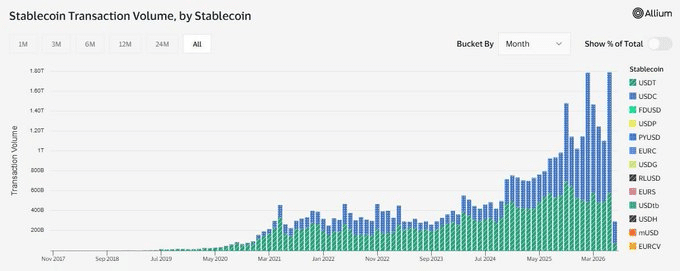
The most compelling evidence of this shift lies in the June performance metrics. According to data provided by Allium, adjusted stablecoin transaction volume reached a staggering record of $1.79 trillion for the month. This represents a 63% increase from May and a dramatic 125% surge year-over-year.
While the market cap of major stablecoins has faced recent contraction, the velocity of these assets—the speed and volume at which they are used to facilitate transactions—is accelerating. This decoupling indicates that while investors may be pulling capital out of the broader crypto market, the actual utility of stablecoins as a payment and settlement layer is increasing. The industry is moving toward a world where stablecoins are used for what they were originally promised to be: a stable, borderless medium of exchange.
Chronology of a Market Divergence
To understand the current state of the stablecoin market, one must look at the timeline of the past two quarters:
- Q1 2026: The market saw initial signs of liquidity tightening, but usage remained anchored in decentralized finance (DeFi) protocols and speculative trading.
- April–May 2026: Market sentiment began to sour, leading to a "risk-off" environment. Capital outflows from major assets began to accelerate, yet stablecoin adoption in non-trading use cases, such as remittance and B2B settlement, showed early signs of resilience.
- June 2026: A pivotal month where the dichotomy became undeniable. Despite an 18%+ drop in the broader crypto market—the largest monthly outflow since February—stablecoin transaction volume hit its all-time high of $1.79 trillion.
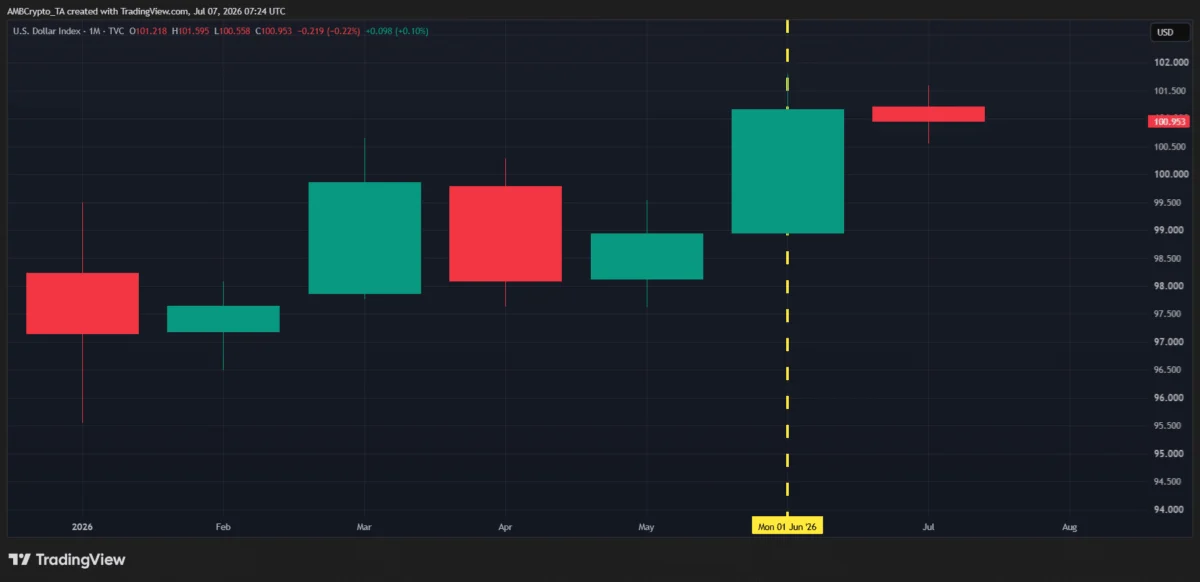
- July 2026 (Current Status): The market is now navigating a period of uncertainty as the U.S. Dollar Index (DXY) strengthens, creating a complex macroeconomic backdrop for digital assets.
The Layer 1 Arms Race
As stablecoin utility grows, the strategic importance of Layer 1 (L1) networks has intensified. Networks are no longer just competing on "throughput" or "TPS" (transactions per second); they are now competing to become the primary settlement layer for global stablecoin traffic.
A prime example of this trend is The Open Network (TON). With its native stablecoin supply increasing by 8% over the past week to exceed $810 million, TON is aggressively positioning itself as a hub for mass-market adoption. This momentum is reflective of a broader "stablecoin arms race," where blockchains like Solana, Ethereum, and Tron are vying to capture the high-volume, low-latency traffic that institutional and retail users now demand.

The logic is simple: as stablecoin activity grows, on-chain liquidity deepens. This creates a "network effect" that makes these L1s increasingly attractive for institutional players looking for reliable rails to move capital across borders.
Supporting Data: The Liquidity-Usage Gap
A critical paradox has emerged: the total market capitalization of the two industry titans, USDT and USDC, has declined by nearly $11 billion over the last two months. This contraction signals a reduction in total on-chain liquidity.
The data presents a clear inverse relationship:
- Usage: Transaction volume is at record highs, implying that people are using stablecoins more frequently for payments and settlements.
- Liquidity: Market cap is trending downward, with nearly $8 billion in outflows during June alone.
This implies that the stablecoins currently "in the wild" are circulating faster than ever, but the "stock" of stablecoins is being depleted. This is a classic indicator of a shift from a "HODL-and-trade" mentality to a "use-and-settle" mentality.
The Macroeconomic Backdrop: The DXY Factor
The strength of the U.S. dollar, as tracked by the DXY index, provides the essential context for this shift. With the DXY posting back-to-back monthly gains—rising over 2.25% in June—the greenback has exerted immense pressure on global fiat currencies. The Japanese Yen, for example, has hit multi-decade lows.
In developing and high-inflation economies, this macro-volatility has made dollar-pegged stablecoins an attractive alternative for everyday commerce. As global citizens and institutions seek refuge from weakening local currencies, the utility of stablecoins as a "digital dollar" is being stress-tested in the real world. However, the macro-strength of the dollar also acts as a double-edged sword; as the dollar gains strength, capital often retreats from riskier crypto assets, leading to the outflows observed in the broader market cap of stablecoins.
Implications for the Future
The implications of this shift are multifaceted, affecting developers, regulators, and investors alike.
For the Crypto Industry
If the divergence between high transaction volume and shrinking market cap continues, it may pose a significant bearish factor for the broader crypto market in the second half of 2026. Liquidity is the lifeblood of price appreciation; if stablecoins are being used for utility rather than being parked in exchanges for trading, the "buying power" of the market may remain suppressed.
For Institutional Adoption
Institutions are watching these metrics closely. The transition of stablecoins into a legitimate "settlement layer" makes them more palatable for traditional financial institutions (TradFi). If stablecoins are viewed as reliable, high-velocity payment rails rather than speculative crypto-tokens, regulatory hurdles may become easier to navigate.
For Developers and L1 Networks
The focus for blockchain developers must shift from building "DeFi casinos" to building "Financial Infrastructure." Networks that can demonstrate high, sustainable stablecoin transaction volumes—independent of speculative trading—will likely be the ones to dominate the next cycle.
Conclusion: A Maturing Asset Class
We are witnessing the "coming of age" for stablecoins. The transition from liquidity engines to global utility frameworks is an essential step toward the integration of blockchain technology into the mainstream economy.
While the contraction in total market cap provides a reason for caution regarding short-term price action, the record-breaking transaction volumes provide a reason for optimism regarding long-term utility. As the industry enters the second half of 2026, the focus must remain on how these assets perform in a high-interest-rate, strong-dollar environment. The winners of this era will not be those with the most hype, but those providing the most stable, secure, and efficient infrastructure for the world’s digital value transfer.
The divide between usage and liquidity is the story to watch. If utility continues to scale while liquidity remains tight, it will mark the beginning of a truly sustainable, utility-driven digital financial system.
