

In a move that has sent shockwaves through the decentralized finance (DeFi) ecosystem, Robinhood CEO Vlad Tenev has publicly pivoted the narrative surrounding the newly launched "Robinhood Chain." While the platform was initially engineered with the lofty, institutional-grade goal of facilitating real-world asset (RWA) tokenization, Tenev’s recent comments suggest a more retail-focused strategy: embracing the volatile, high-stakes world of memecoins.
The declaration has polarized the crypto community, pitting traditional institutional advocates against the "degen" retail crowd that has defined market cycles on chains like Solana and BNB. As Robinhood attempts to bridge the gap between legacy brokerage and on-chain speculation, the industry is left questioning whether this move is a strategic masterstroke for market share or a branding misstep that undermines the platform’s professional aspirations.
The Genesis: From RWA to "Meme-Ready" Infrastructure
When Robinhood first announced its intent to launch an Ethereum Layer 2 (L2) scaling solution, the industry narrative was clear: Robinhood was aiming to bring multi-trillion-dollar institutional capital on-chain. The focus was on compliance, efficiency, and the democratization of traditional financial instruments through tokenization.
However, the tone shifted abruptly when Tenev took to social media to highlight the chain’s versatility. "While we’re building Robinhood Chain to be the best chain for RWA… it works great for memes too," Tenev remarked.
This pivot represents a significant departure from the company’s previous, more buttoned-up approach. By inviting the memecoin community to build on its infrastructure, Robinhood is effectively signaling that it is willing to sacrifice a degree of institutional prestige to capture the explosive, albeit speculative, liquidity that memecoins provide.
Chronology: The Rapid Ascent of the Robinhood Chain
The timeline of the Robinhood Chain’s emergence serves as a case study in how quickly sentiment can shift in the crypto sector:
- Phase 1: Institutional Framing. The project is introduced with a focus on "real-world assets," targeting institutional partners, regulatory compliance, and a seamless transition for traditional investors into the DeFi space.
- Phase 2: The Pivot. CEO Vlad Tenev acknowledges the reality of the current market cycle, publicly endorsing the use of the L2 for memecoin trading, effectively opening the gates to the "degen" economy.
- Phase 3: The Viral Surge. Following Tenev’s endorsement, the market responds instantly. New tokens like Cash Cat (CASHCAT) and 4663 experience meteoric, multi-hundred-percent gains.
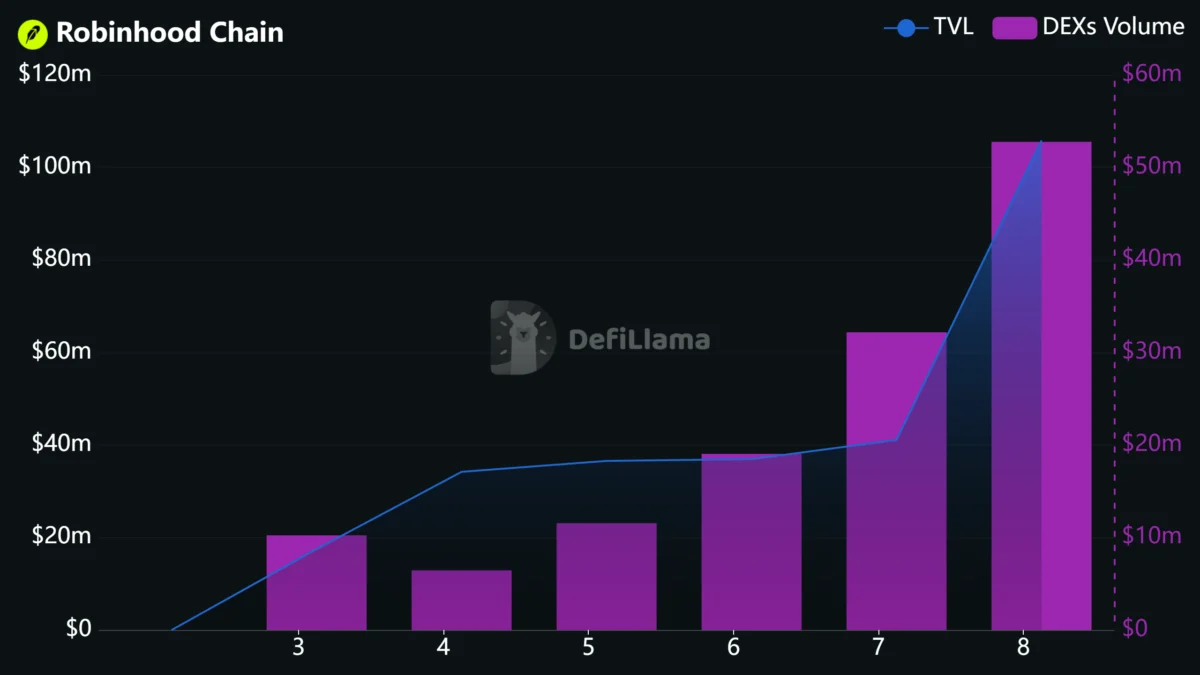
- Phase 4: The Liquidity Explosion. Within a single week, the Total Value Locked (TVL) on the chain leaps from $10 million to $105 million, while DEX trading volumes surge five-fold to $52 million.
This rapid growth validates Tenev’s intuition: regardless of the mission statement, retail liquidity follows the "meme."
Supporting Data: Why Memecoins Dominate the Landscape
To understand why a major player like Robinhood would pivot toward memecoins, one must look at the current dominance of these assets on competing chains. Data from the current market cycle consistently demonstrates that memecoins are not just a side-show—they are the engine of blockchain activity.
Market Share and Activity
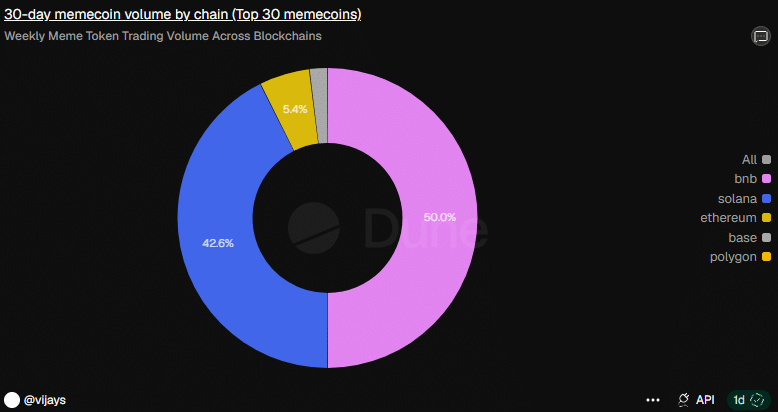
On established networks such as Solana and the BNB Chain, memecoin activity accounts for approximately 40% to 50% of total trading volume. These chains have become the primary battlegrounds for liquidity, with protocols like Pump.fun serving as catalysts for massive retail engagement.
The Base Comparison
The comparison to Coinbase’s Base L2 is inevitable. While Coinbase has maintained a more cautious, "centralized-lite" reputation, Base has seen significant organic growth by allowing a wide variety of assets—including memecoins—to flourish. Currently, Base holds a significant position in the L2 ecosystem, though its market share in the memecoin segment remains under 2%. By opening the floodgates early, Robinhood is clearly attempting to leapfrog the organic growth phase and capture the attention of the high-velocity trading demographic immediately.
Official Responses and Industry Backlash
The reception to Tenev’s pivot has been decidedly mixed, with venture capitalists and industry analysts offering sharp critiques of the company’s direction.
Simon Dedic, a prominent figure at Moonrock Capital, expressed the skepticism shared by many institutional observers: "Just another L2 that offers no real value over the existing ones is exactly what we were missing. But hey, you can trade memes on it too. Someone tell Vlad it’s not 2024 anymore."
This criticism touches on a deeper fatigue within the crypto space: the proliferation of L2 solutions. As the market becomes saturated with Ethereum scaling solutions, critics argue that a new chain must provide a unique utility—such as superior RWA integration—rather than simply providing another venue for casino-style gambling.
Conversely, the retail community has cheered the move. For many, the ability to trade memecoins on a regulated, trusted platform like Robinhood represents a "best of both worlds" scenario. The concern, however, remains centered on the risks. History has shown that while memecoins drive volume, they also facilitate massive retail losses and serve as magnets for predatory behavior, as evidenced by the scrutiny surrounding projects like the Trump-affiliated World Liberty Financial.
Implications: The High-Stakes Bet for Market Dominance
The decision to lean into the memecoin sector carries profound implications for Robinhood’s long-term trajectory.
1. The Double-Edged Sword of User Acquisition
Memecoins are undeniably the fastest way to gain market share in a new ecosystem. By welcoming them, Robinhood has seen a 10x growth in TVL in under seven days. This momentum is hard to ignore. However, this growth is often fleeting. Memecoin traders are notorious for their lack of loyalty; they migrate to whichever chain offers the highest volatility and the most "alpha." Whether Robinhood can retain this capital once the initial hype cycles for CASHCAT and 4663 die down remains the multi-million dollar question.
2. The Brand Dilemma
Robinhood built its reputation on accessibility for the "common man," but it has worked hard to establish itself as a professional, regulated brokerage. By fostering a environment where meme-driven gambling thrives, the company risks alienating institutional partners who may be wary of the regulatory optics associated with such volatility. The firm must now balance its reputation as a safe, consumer-facing app with its new identity as a home for high-risk, high-reward blockchain speculation.
3. The Future of L2 Competition
The competition between L2s is no longer just about technical specifications like transaction speed or gas fees. It has become a battle for cultural relevance. By betting on memecoins, Robinhood is essentially declaring that its competitive advantage is not its throughput, but its user base. If successful, this could force other L2s to abandon their "serious-only" mandates and compete for the same speculative capital.
Conclusion: A New Era for Robinhood
The pivot of the Robinhood Chain is a stark reflection of the current reality of the cryptocurrency market. In a landscape where user attention is the scarcest commodity, even the most institutionally-focused entities are finding it difficult to ignore the magnetic pull of memecoin culture.
While Tenev’s move has successfully jump-started the chain’s activity metrics and provided a much-needed boost to its TVL, the long-term success of the project will depend on whether this surge in volume can evolve into sustainable, utility-driven adoption. The market is watching closely to see if Robinhood can maintain its integrity as a bridge to the future of finance while simultaneously serving as the latest playground for the crypto-degen crowd.
For now, the gamble has paid off in terms of numbers. Whether it pays off in terms of enduring value remains to be seen. As the industry moves forward, the Robinhood Chain serves as a reminder that in the world of crypto, the path to mass adoption is rarely a straight line—often, it is a detour through the volatile, unpredictable world of memes.
